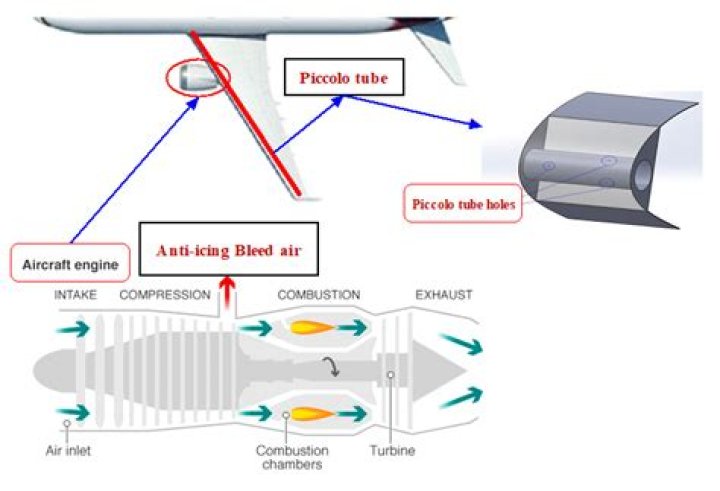
What is a drawback of using bleed air anti-ice systems?
Using bleed air will result in a performance loss to the engine which will have to be determined after analysis of the bleed air requirements and icing conditions.
What is the significance of anti-icing using engine bleed air?
Anti-Icing Systems Aircraft Design for Icing
Aircraft that use bleed air usually have warning systems to inform the pilot if the available heat is insufficient. This sometimes occurs when engine power is retarded for descent or holding, thereby reducing the volume and/or temperature of the bleed air.
What is the difference between anti-ice and de-icing in aircraft?
Anti-icing equipment is turned on before entering icing conditions and is designed to prevent ice from forming. Deicing equipment is designed to remove ice after it begins to accumulate on the airframe.
Is deicing a plane safe?
During the procedure, the pilots will shut off the external airflow, to prevent the aircraft (and its passengers) from sucking in the chemicals. Propylene glycol, which is typically used, is non-toxic. Ethylene glycol, which is less commonly used, is toxic. In either case, they smell like maple syrup (yum!).
Why do PILOTS DEICE? Explained by CAPTAIN JOE
Is plane deicing necessary?
Since airplanes must have clean surfaces to fly safely, any type of contaminant—such as ice or snow—has the potential to interfere with a safe take-off due to the disruption of air flow. That's why during the colder months, deicing is crucial for a safe departure.
How does icing affect aircraft?
Icing on the aircraft's propeller increases drag and reduces thrust. Without the balance between the forces, the aircraft may become uncontrollable. As ice forms on the leading edge of an aircraft's wing, it causes the wing to stall at a lower angle of attack and at a higher airspeed.
What is the difference between de-icing and anti-icing system and which one do you think works better?
In de-icing mode, a small, uncritical, amount of ice is allowed to form before it is removed. This is done by first melting the ice at the interface of the surface and then shedding it from the aircraft. The main advantage of anti-icing is that it generates less aerodynamic disturbances than de-icing.
When should de-icing systems be operated?
1 It is expected that deicing or anti-icing systems will be activated and operated continuously in the automatic mode, if available, at the first sign of ice accumulation, or as directed in the AFM. Occasional and frequent cycling refers to manually activated systems.
What is the significance of thermal anti-icing system?
Thermal Pneumatic Anti-icing
Thermal systems used for the purpose of preventing the formation of ice or for deicing airfoil leading edges usually use heated air ducted spanwise along the inside of the leading edge of the airfoil and distributed around its inner surface.
What ice protection system that often use bleed air from the engine compressor to prevent the formation of frost on these surfaces?
Leading Edge Slat Anti-Ice System. Aircraft that utilize leading edge slats often use bleed air from the engine compressor to prevent the formation of frost on these surfaces.
What is de icing system?
Description. Aircraft and engine ice protection systems are generally of two designs: either they remove ice after it has formed, or they prevent it from forming. The former type of system is referred to as a de-icing system and the latter as an anti-icing system.
Which aircraft systems are typically anti iced deiced?
The most common types of ice protection systems for general aviation aircraft today are pneumatic boot systems and fluid freeze point depressant systems. Electric thermal heating systems are also available and are most commonly used on windshields and propellers.
What impact does using anti ice de-ice have on performance?
If you are limited by EGT for available power, turning on anti-ice is going to degrade your climb performance. Likewise, on a descend using anti-ice might require running the engines higher than flight idle to supply enough air, which effects the descend path and lowers fuel economy.
What aircraft systems use high pressure bleed air for operation?
Description. The design of most turbojet and turboprop powered aircraft incorporates a bleed air system. A bleed air system uses a network of ducts, valves and regulators to conduct medium to high pressure air, "bled" from the compressor section of the engine(s) and APU, to various locations within the aircraft.
Why is de icing a plane important?
On most jet aircraft, hot air from the engines is routed through piping in the wings, tail and engine openings to heat their surfaces and prevent icing. Preventing ice formation in the engine openings is important, as ice here could dislodge and cause damage as it's ingested into the engine.
Can you take off with frost?
(a) No pilot may take off an airplane that has frost, ice, or snow adhering to any propeller, windshield, stabilizing or control surface; to a powerplant installation; or to an airspeed, altimeter, rate of climb, or flight attitude instrument system or wing, except that takeoffs may be made with frost under the wing in ...
What are the effects if we will not conduct a ground de icing of aircraft before departure?
THE AIRCRAFT FUEL TEMPERATURE ADJACENT TO THE SKIN IS LESS THAN THE AMBIENT TEMPERATURE. IF YOU DO NOT OBEY THIS WARNING, THE HOLDOVER TIME WILL DECREASE. THIS CAN CAUSE INJURY TO PERSONS AND DAMAGE TO THE EQUIPMENT. WARNING: IF YOU DO THE ANTI-ICING PROCEDURE MORE THAN ONCE, DO THE DE-ICING PROCEDURE AGAIN ALSO.
How do you use anti-icing on a plane?
The fluid must be heated to 60 – 80C (140 – 180F) at the nozzle and applied in sufficient quantities to provide for adequate heat transfer to aircraft surfaces during the second, anti-icing step. The one-step method uses heated, diluted fluids to de-ice and anti-ice in one step.
What's the difference between deice and anti ice?
Deicing is the reactive application of ice-control products to driving or walking surfaces to melt existing snow and ice. Crews perform deicing after snow-removal operations to melt remaining snow and ice. Anti-icing is the proactive application of melting products to driving or walking surfaces before a storm.
Can planes take off in ice?
Since planes are designed to fly in this temperature, cold weather on the ground does not, by itself, inhibit flight. However, cold weather can impact activities on the ground. While less of an issue for take-off, an icy or wet ground can extremely inhibit a plane's ability for landing safely.
How does frost affect the lifting surfaces?
A : Frost does not change the basic aerodynamic shape of the wing, but the roughness of its surface spoils the smooth flow of air, thus causing an increase in drag and an early airflow separation over the wing, resulting in a loss of lift.
What could be the reason why planes need to be de iced before lift off?
“Smooth airflow assists in the production of lift, and if ice accumulates on the wings, it distorts the smooth, laminar flow of air over the wing, and lift is reduced,” Manders told AccuWeather. “If lift is reduced too much, there's the potential of an aerodynamic stall.”
Is deicing a plane normal?
As the name implies, airplane de-icing is a process that's done to remove ice and the buildup of snow and frost from the surface of the airplane. It's a completely normal process in the colder months, and shouldn't be anything to concern you, so don't worry!
How much do plane deicers make?
How much does an Aircraft Deicer make? As of Jun 18, 2022, the average annual pay for an Aircraft Deicer in the United States is $34,509 a year. Just in case you need a simple salary calculator, that works out to be approximately $16.59 an hour.